
Environmentally Friendly Windows
As Winsa, we aimed to complete the work that European countries were obliged to complete by 2015 before them due to our environmental sensitivity, and to leave our children a clean environment as early as possible.
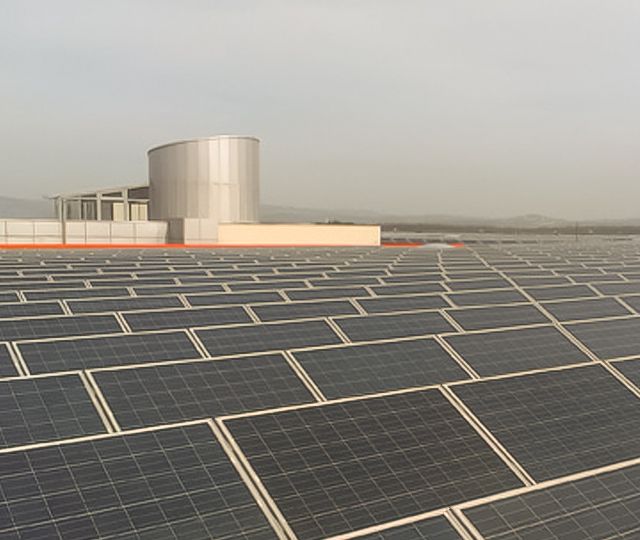
For today, for tomorrow, and for the day after tomorrow...
This is why, just as we took action for the environment in 2004 with the use of 100% recyclable TPE gaskets, we completed the circle by switching to profile production with environmentally friendly calcium-zinc stabilizers: For today, for tomorrow, and for the day after tomorrow...
The provision of free competition and free movement, which is accepted as one of the fundamental elements of European integration, has made common initiatives and a common policy mandatory in the field of environment.
The EU's environmental policy is of special importance both because the environment is an area with global effects and because it is very closely related to the future of humanity and our world. Environmental issues in our country have also gained great importance.
Common Environmental Policy
The most fundamental reasons for creating a common environmental policy within the European Union are the fact that environmental pollution does not recognize political boundaries and the necessity of maintaining and developing natural living conditions in a healthy way in order to further improve the quality of life.
New approaches have begun to be developed in Europe and around the world, considering the effects of all products used in human life on the environment, human health and safety. In this context, the European Union has established the Voluntary Commitment of the European PVC Industry called VINYL 2010 since 2000.
This council includes not only PVC producers, but also the industry that produces PVC additives including PVC. In this context, Australia has announced that it will not accept plastic materials containing heavy metals into its country since the beginning of 2008. In the United States, the use of lead and similar heavy metals in PVC products has been banned.
The ECVM (The European Council of Vinyl Manufacturers), ESPA (The European Stabilisers Producers Associations) and EuPC (European Plastic Converters) within the Vinyl 2010 Council have committed to reduce the use of lead, which is the most commonly known among heavy metals, in the following ratios, based on the consumption amounts of 2000.
15% reduction in 2005, 50% reduction in 2010, 100% reduction in 2015.
Vinyl 2010 (Voluntary European PVC Industry Council) banned the use of Ba-Cd stabilizers, which are heavy metals, in all European markets since March 2001. All PVC users started using lead-based stabilizer groups by following technological developments since 2001. With the increase in sectoral developments and environmental awareness, Calcium-Zinc based stabilizers were developed as an alternative to lead-based stabilizers.
As a result of this development, the VINYL 2010 Voluntary European PVC Industry Council aimed to end lead stabilizer consumption by European users by 2015 and transition to calcium zinc stabilizer use. This goal will bring great advantages in terms of use, transportation and storage, especially in compound production. There will be no negative effects for end users, and environmentally friendly windows compatible with European standards will be produced.
This transition has many technological difficulties. Since PVC is not a raw material used alone, it is enriched with many additives and made ready for industrial use. Among these additives, stabilizers are of great importance. Therefore, it can be said that it is the cornerstone of PVC Compound.
PVC profile molds and production machines are always designed and manufactured in accordance with the composition created by this chemical structure. Changing the chemical structure requires very high engineering knowledge, cost and know-how, taking into account existing mold and machine investments.
Therefore, the transition process has been spread over a very long period even in European countries. Winsa completed this process in a very short time with its accumulated knowledge and started using calcium zinc stabilizers in all window and door profile production.
Winsa, which is a follower and implementer of innovations in its sector, has taken one more step forward in its sector with this application.